In our ever-evolving narrative, Stone World forges a path beyond the confines of traditional media. Our goal is to connect our architect, design, fabricator, and stone-and-tile enthusiast readers with the products and materials they need with just a click. Simply put, we work hard so you don’t have to.
Remember getting that first smartphone and how it changed everything about your workday? Phone calls, text messages, web access, email, and so much more are at your fingertips, increasing your daily productivity and allowing you to respond quickly to your customers’ needs. For the modern fabrication facility, implementing SawJet technology and digital processes can have a similar impact on shop productivity.
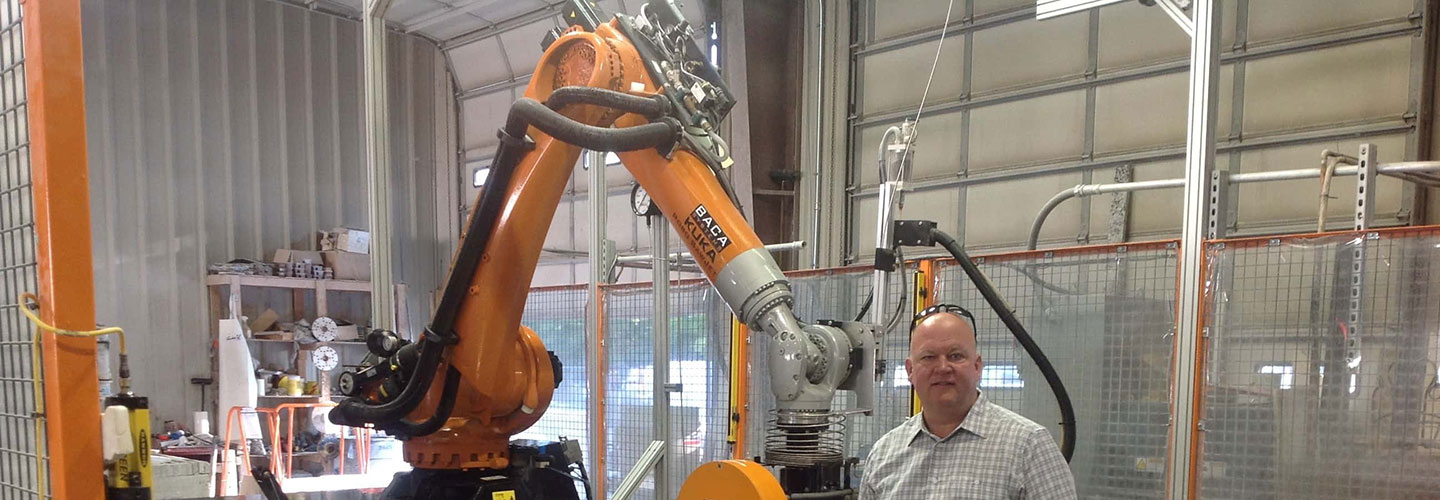
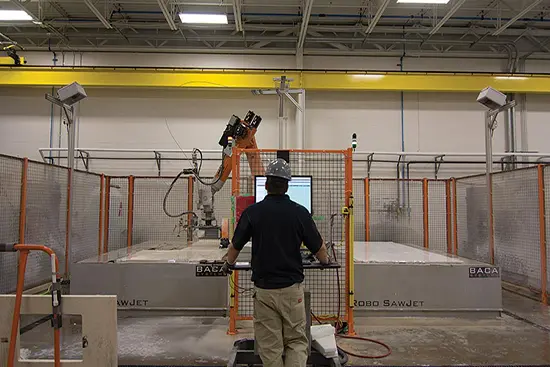
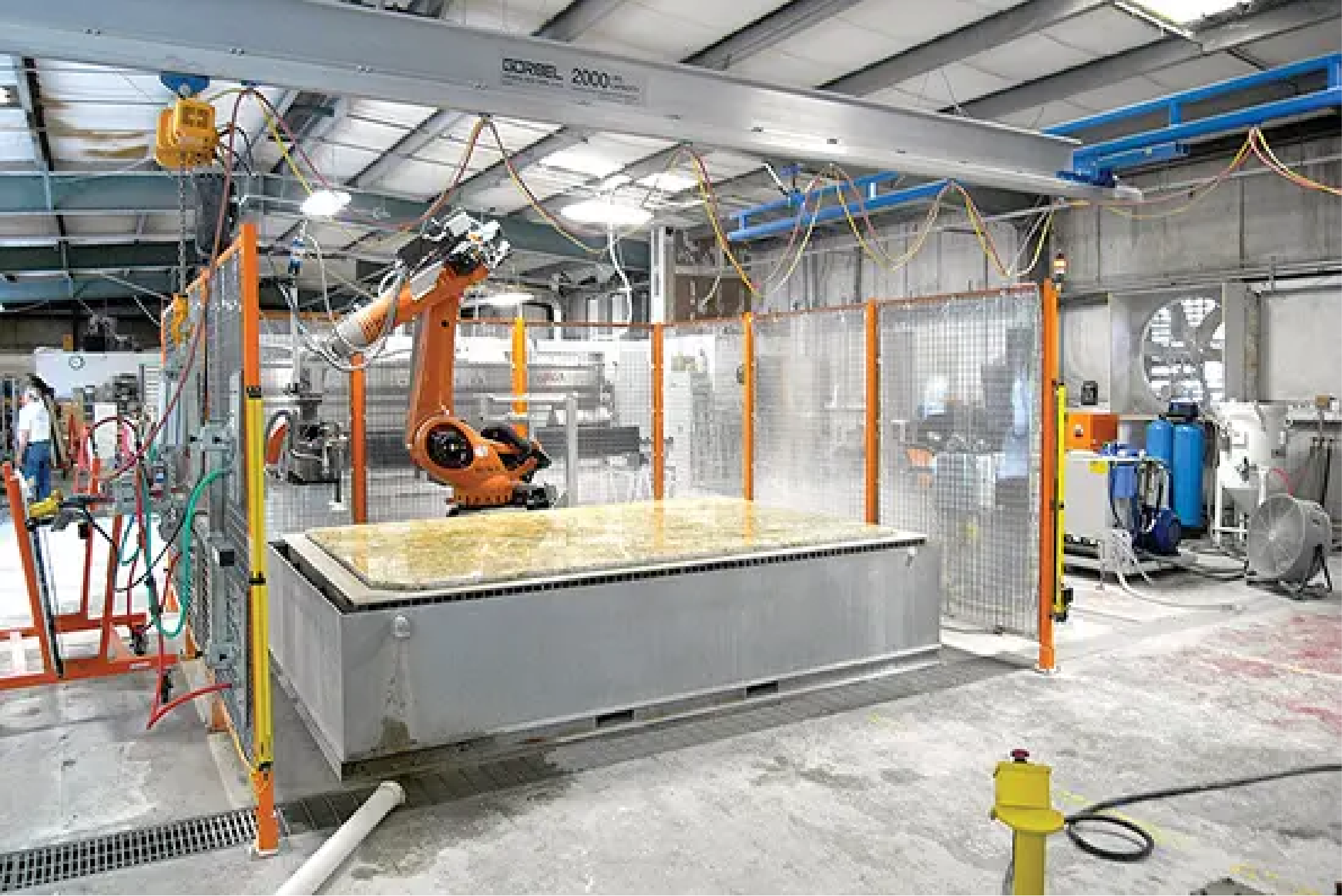
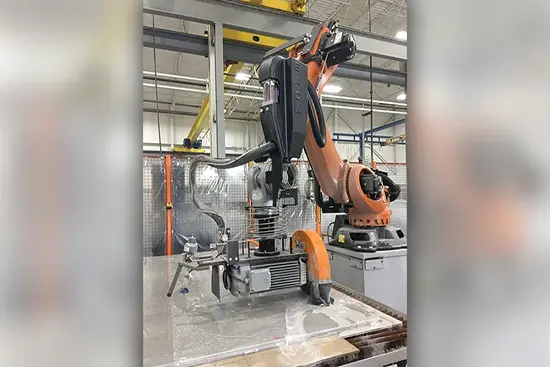
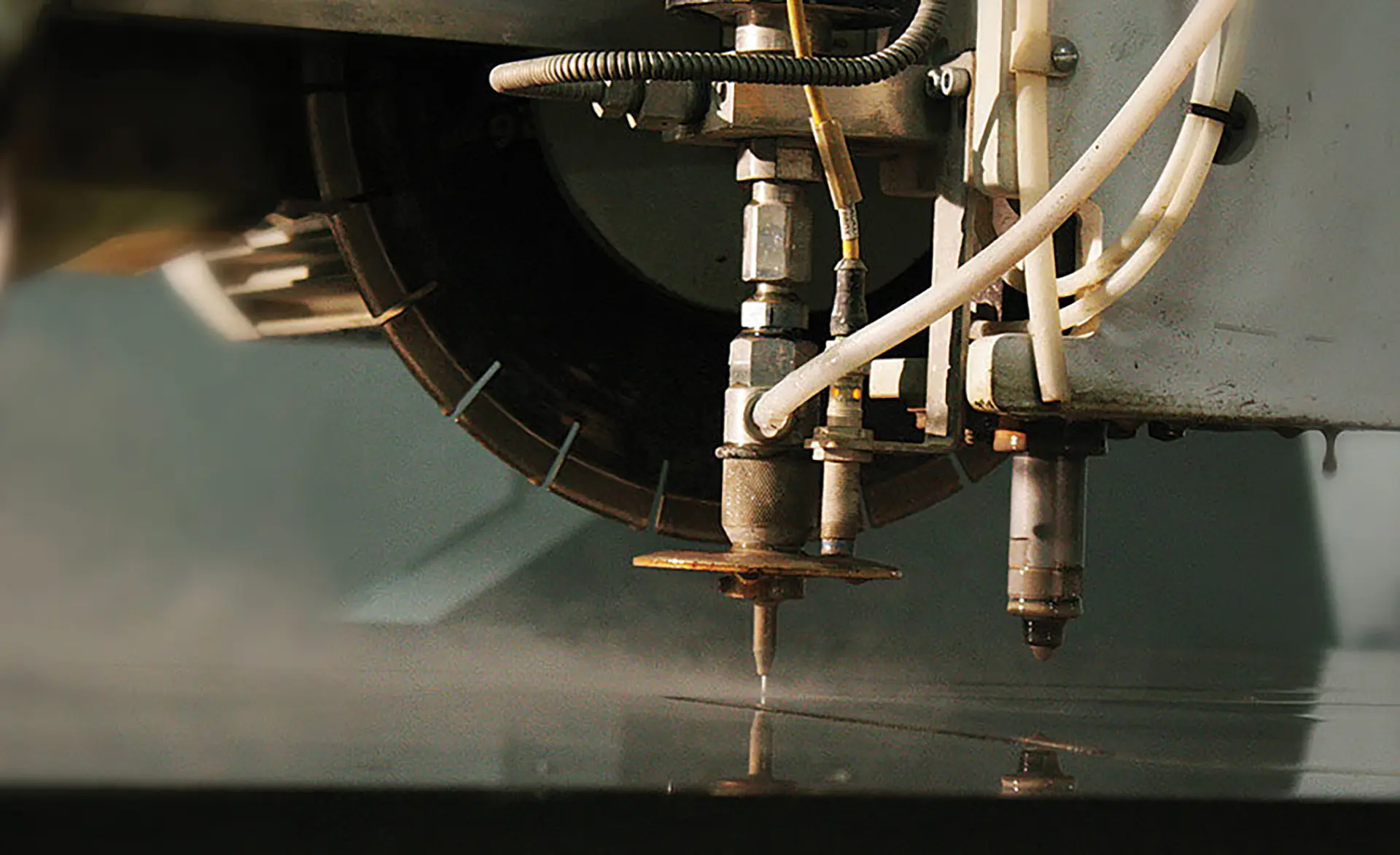
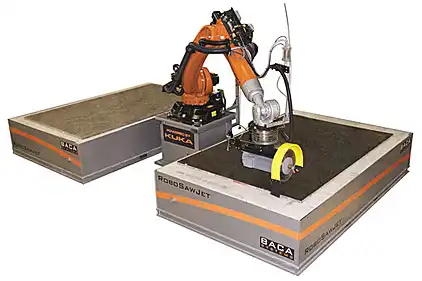
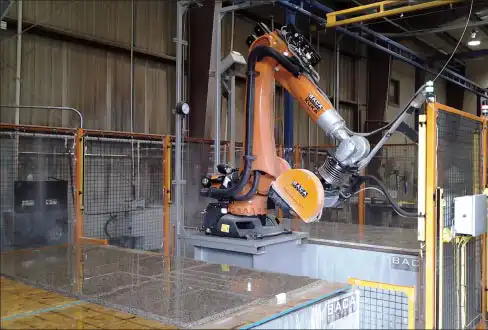
SawJet technology, which combines a saw and an abrasive waterjet integrated into a cutting machine, can reduce the time required for nearly every step in the fabrication process compared to manual processing. With this technology, a saw makes fast cuts wherever there is a straight cut, and the waterjet handles curves, faucet openings, sink openings, and other complex shapes. In addition, for cuts in areas where an overcut would damage the adjacent piece, the saw can stop the cut short, and the waterjet can finish the cut tight to the edge. This allows for much greater material yield and eliminates the need to move pieces on the cutting table in order to perform an interfering cut.
SawJet technology is a digital technology that requires a CAD file to define where the machine will make cuts on the slab. This typically means measuring the job with a device, such as a laser templator, rather than manually measuring and creating physical templates. While this might be initially intimidating to those new to digital processes, fabricators quickly find that this technology cuts templating time in half and results in fewer errors than manual measurements. In addition, the template file can be emailed back to the shop remotely, allowing the templator to move on to the next job more quickly.
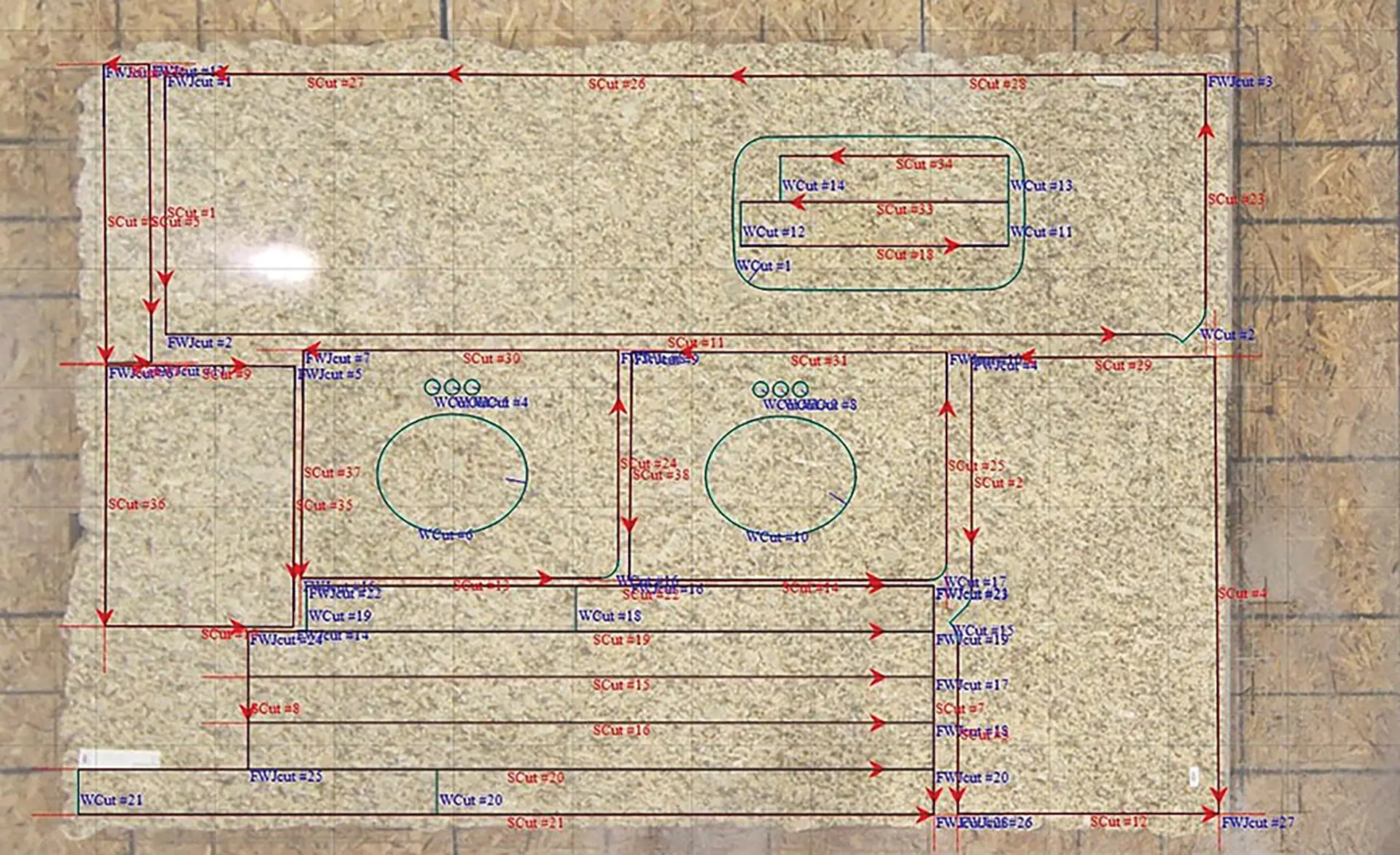
Once the digital file is available, all steps in the fabrication process are defined, making it easy to move on to cutting. The file can be loaded into the SawJet machine, and the cut shapes are overlaid on a photo of the slab. The operator can then move the shapes over the image to place the cuts for best yield and visual layout. This process typically takes less than five minutes — saving a great deal of time compared to completing a manual layout, which can take 20 minutes or more. With the digital layout and the benefit of the SawJet process, it is common for yields to increase by 10 to 20%, resulting in better profitability and
fewer remnants.
Another huge benefit of using SawJet technology is that the cutting process is much faster than on a manual bridge saw. A job that would take one to two hours on a manual saw can be cut in 20 to 30 minutes with a SawJet. In addition, since the SawJet can cut sink openings, faucet holes and curved cuts, several downstream steps are eliminated. This saves labor, reduces material movement in the shop, and allows jobs to go directly to polishing or CNC edge finishing. Also, for shops that use CNC technology, additional capacity becomes available because some operations normally performed on these machines are completed upstream in the SawJet process. This also reduces tooling costs for the CNC, since cuts normally performed with finger bits are no longer required.
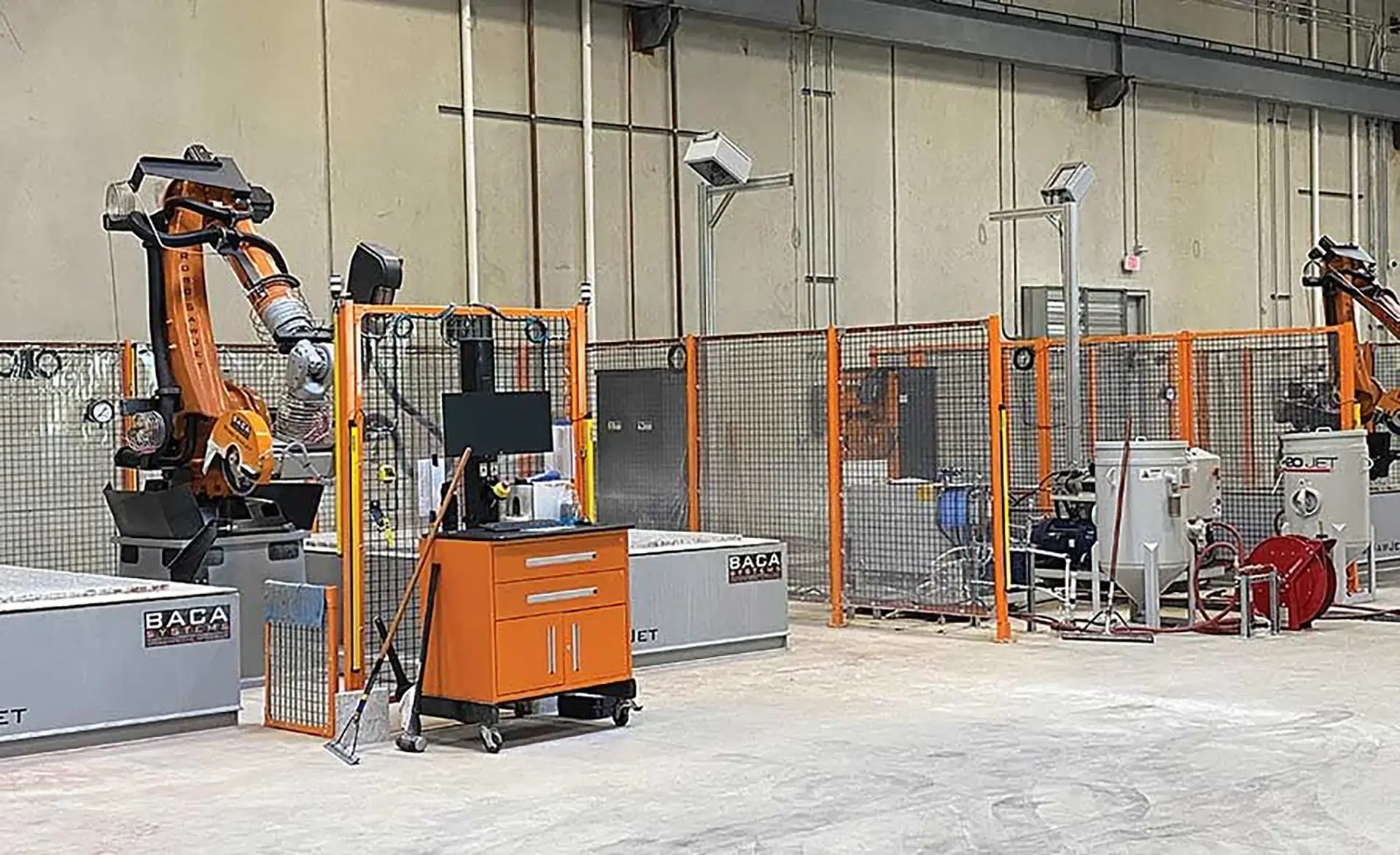
The combination of labor and material savings, reduced errors, faster processing times, and fewer downstream processes makes SawJet technology a strong consideration for any fabricator looking to make a significant impact on the productivity of their countertop manufacturing operation.
This content is a feature from the Stone World.

Plan your visit today, and see how BACA Systems' can maximize your profitability.